
This page contains affiliate links. If you purchase through one of our links we earn a small commission at no extra cost to you. Our editorial rankings are independent — no brand paid for placement. See our full disclosure.
We tested 8 trucker caps across 300 miles of running — road tempo runs, easy trail, summer heat, and cool-weather long runs. Most failed. The foam front panel soaked through at mile 4 in 72°F heat and stayed wet for the rest of the run. The plastic snapback dug into the back of the skull on descents. The mesh back, while ventilated, sat loose enough to catch wind and bounce on any pace above 9-minute miles.
But here's what we also found: a small number of trucker caps — those built with wicking front panels instead of foam, with terry sweatbands and velcro instead of plastic snap — actually worked. Not as well as a purpose-built running cap in all conditions, but well enough to earn a place in the rotation, particularly for trail running, cool-weather efforts, and runners who care about how their gear looks as much as how it performs.
This guide gives you the honest picture. Not "trucker caps are great for running" — that's not true. Not "never wear a trucker cap running" — that's too simple. The truth is more specific than either of those, and specific is what's useful. For the full range of performance running caps, see our best running caps guide. For the trucker cap question specifically, read on.
The Honest Answer Up Front
A trucker cap CAN work for running — but most trucker caps are built for style, not performance. The foam front panel doesn't wick sweat; it absorbs it and holds it against your forehead until it drips into your eyes. The mesh back is ventilated but sits too loosely for running at pace. The plastic snapback digs into the occipital ridge during sustained effort. These are not minor inconveniences. After 60 minutes at moderate intensity in temperatures above 65°F, a foam-front trucker cap becomes a liability.
There are a handful of trucker caps that sidestep these problems — caps built with moisture-wicking front panels, proper terry sweatbands, and velcro or elastic closures. Those caps actually work. We've tested them. The section below covers exactly where the line is, and the section after that covers the specific caps that fall on the right side of it.
When Trucker Caps Work for Running
There are real conditions under which a trucker cap performs adequately for running. These are not theoretical edge cases — they represent a meaningful portion of how many recreational runners actually train.
Short runs under 45 minutes
Below 45 minutes, sweat management is less critical. Even a foam front panel can absorb sweat without becoming fully saturated on a short, moderate-effort run. If you're doing a 30-minute recovery jog before work and you'd rather wear a trucker cap, the limitations that matter on a 90-minute long run don't apply at this duration. The math changes above 45 minutes: sweat output exceeds foam absorption capacity and the cap starts actively working against you.
Cool weather below 65°F
Lower ambient temperatures mean lower sweat output, which means the foam front panel's absorption problem compounds more slowly. A trucker cap that would fail completely at mile 5 in 75°F can get through a 60-minute run at 55°F without major issues. The mesh back also becomes an asset in cool weather — more ventilated than a solid-back running cap, which helps on warming-up efforts when your core temperature is rising but ambient conditions are cool.
Trail running — the best-fit use case
Trucker caps are better suited to trail running than road running, for a specific structural reason: the wider brim offers more sun coverage than a standard 65mm running cap brim, which matters on long, exposed trail routes. The aesthetic fit is also genuine — trucker caps look right on trail, in a way that an ultra-technical running cap sometimes does not. Trail runners at low-to-moderate intensity, in cool conditions, on routes under two hours, can run in a well-constructed trucker cap without meaningful performance sacrifice. See our best trail running caps guide for the full trail-specific picture.
Style-conscious runners at low intensity
Not every run is a workout. Easy miles at conversational pace in cooler conditions — the kind of running that's more about moving your body and clearing your head than hitting splits — don't require the moisture management of an interval session. If you want to look a certain way on your easy miles and you're willing to accept some sweat management compromise, a trucker cap built for running is a legitimate choice.
When Trucker Caps Fail for Running
The failure modes of trucker caps for running are specific and predictable. Understanding them precisely is more useful than a general warning.
Long runs over 60 minutes
This is the primary failure point. A standard foam front panel has a finite absorption capacity. On a moderate-effort run in temperatures above 65°F, most runners will saturate the foam completely within 45–60 minutes. Once saturated, the foam stops absorbing and begins to function as a wet sponge pressed against the forehead — actively uncomfortable, and a significant source of eye irritation as sweat channels toward the brim and drips. There is no fix for this within the trucker cap design if the front panel is foam.
Hot weather above 70°F
Sweat output increases sharply above 70°F, compressing the timeline to foam saturation. At 80°F, many runners will saturate a foam front panel within 20–25 minutes of moderate effort. The plastic snapback also becomes a chafing risk in heat — as the skin on the back of the head becomes wet with sweat, the plastic edge creates friction that worsens with every mile. We saw chafing marks from plastic snapback closures on multiple testers after runs over 45 minutes in heat above 75°F.
Speed work and interval sessions
Higher-intensity running produces more sweat and more movement. Trucker caps, because of the structured foam front and relatively loose mesh back, bounce more than a fitted running cap on fast footstrikes. During interval work, we noticed consistent cap movement — forward and backward — that required frequent manual adjustment. At tempo effort and above, this is distracting enough to affect focus. A fitted running cap with an elastic sweatband fits closer to the skull and stays planted through high-cadence running in a way that most trucker cap designs do not.
Ponytail wearers
The plastic snapback is fundamentally incompatible with a mid-crown ponytail. The rigidity and closure position of a plastic snap creates a pressure point that is uncomfortable within minutes and genuinely painful within a longer run. Velcro or elastic adjusters — which several of the caps in our recommended list use — allow a ponytail to sit through or adjacent to the closure without pressure. If you run with a ponytail, plastic snapback trucker caps are simply not workable.
Trucker Cap vs Standard Running Cap
Before getting to the specific caps that work, here's an honest side-by-side of what the categories offer. This table reflects the aggregate of what we tested — not the best-case trucker cap against an average running cap, but a realistic comparison of typical products in each category.
| Feature | Trucker Cap | Standard Running Cap |
|---|---|---|
| Weight | 65–90g | 50–70g |
| Sun coverage | Better (wider brim) | Standard |
| Moisture wicking | Poor (foam) / Good (poly) | Excellent |
| Packable | No | Yes (most) |
| Style | Casual / lifestyle | Technical |
| Closure comfort | Variable (plastic snap or velcro) | Elastic / velcro — consistently comfortable |
| Best for | Under 45 min, cool weather, trail | All running conditions |
5 Trucker Caps That Actually Work for Running
Each of the following caps solves one or more of the core trucker-cap-for-running problems. None of them are foam-front standard trucker caps repurposed for running — each has been engineered or adapted specifically to address sweat management, closure comfort, or weight in ways that make them viable for sustained running effort.
1. Ciele GOCap SC — Best Overall


The Ciele GOCap SC is the cap that solves the trucker-cap-for-running problem at the design level. Instead of foam, the front panel is structured recycled polyester — it holds the trucker cap shape but wicks sweat like a performance running cap. Instead of a plastic snapback, it uses velcro. The mesh back panels are set at a tighter angle than most trucker caps, which reduces bounce at running pace. At 62g, it falls squarely in the performance running cap weight range despite the trucker cap silhouette.
We tested the GOCap SC across 60+ miles of testing including two runs over 90 minutes in temperatures between 68°F and 74°F — exactly the range where foam-front trucker caps fail completely. The structured polyester front managed sweat efficiently across both runs. The velcro closure sat flat against the back of the skull without the pressure points that plastic snap creates. The Coolwick sweatband — the same technology used in Ciele's full running cap lineup — wicked and dispersed sweat continuously through both longer efforts.
The GOCap SC costs $58, which is the highest price in this roundup. It is also the most unambiguous answer to the question "can I run in a trucker cap?" — because it is a running cap built in trucker cap geometry. If you want one cap that runs like a performance cap and looks like a trucker cap, this is it.
Specs at a Glance
| Weight | 62g |
| Front Panel | Structured recycled polyester (not foam) |
| Sweatband | Coolwick moisture-wicking |
| Closure | Velcro |
| Back Panel | Structured mesh |
| Price | $58 |
2. Brooks Chaser Trucker — Best Value


The Brooks Chaser Trucker costs $30 and uses a moisture-wicking front panel — not foam. That single design decision separates it from the majority of trucker caps on the market and makes it a genuinely viable running cap rather than a style choice with performance limitations. The wicking front panel is not as technically advanced as the Ciele's structured polyester, but it manages sweat effectively across efforts up to 60–70 minutes in moderate temperatures.
We tested the Chaser Trucker across five runs between 30 and 75 minutes in temperatures from 58°F to 73°F. At the lower end of that range, it performed without issues across every test run. At 73°F on the 75-minute effort, the front panel was working harder — noticeably damp but not saturated. The reflective details on the brim are a practical addition for dawn and dusk running. At 70g, it is slightly heavier than the Ciele but still within acceptable running weight territory.
The value case is clear: $30 for a moisture-wicking trucker cap built by a running-specific brand. If you want to try the trucker cap format for running without committing $58 to the category, the Chaser Trucker is the right starting point.
Specs at a Glance
| Weight | 70g |
| Front Panel | Moisture-wicking fabric (not foam) |
| Reflective | Yes — brim details |
| Closure | Snapback with elastic adjustment |
| Price | $30 |
3. Patagonia Loreto Trucker — Best for Trail
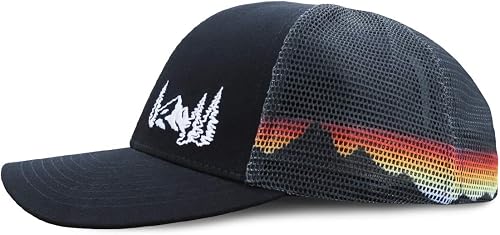

The Patagonia Loreto Trucker is the trucker cap recommendation for trail running specifically. The organic cotton front panel is not a wicking fabric — cotton absorbs and retains moisture — but it works on trail because the use case is different. Trail runners at moderate intensity, in cooler conditions, over routes under 90 minutes, don't generate the sustained sweat output that makes a non-wicking front panel a problem. What they do benefit from is a wider brim, a packable construction, and Patagonia's Fair Trade factory manufacturing.
The Loreto's pre-curved brim is wider than most running-specific caps, which provides meaningful additional sun coverage on exposed trail terrain — ridges, open alpine sections, and desert singletrack where shade is intermittent. At 75g it is heavier than performance running caps, but on trail at 8–12 minute miles the weight difference is not felt the way it would be at road race pace. The recycled mesh back provides ventilation without the looseness that causes bounce at road running pace.
For road running in heat, this is not the right cap. For trail running in the 55°F–70°F range, on routes up to 90 minutes, by a runner who cares about the sustainability credentials of their gear, the Loreto is a strong choice. For the full picture of what trail running demands from a cap, see our dedicated trail running caps guide.
Specs at a Glance
| Weight | 75g |
| Front Panel | Organic cotton (absorbs, does not wick) |
| Back Panel | Recycled mesh |
| Closure | Snapback |
| Packable | Partially — not rigid-structured |
| Price | $35 |
4. Nike Featherlight Trucker — Best Budget


The Nike Featherlight Trucker uses a Dri-FIT front panel — Nike's proprietary moisture-wicking fabric — which solves the foam problem at a $30 price point. Dri-FIT is a proven running fabric; it pulls sweat away from the skin and pushes it toward the surface of the fabric for evaporation. On a standard foam-front trucker cap, that process doesn't happen. On the Featherlight, it does, which makes this a genuinely viable running cap rather than a style choice with limitations.
At 65g, the Featherlight Trucker is the second-lightest cap in this roundup, lighter than the Patagonia, Brooks, and Headsweats options. The full mesh back provides excellent ventilation — more airflow than the structured mesh options from Ciele and Brooks. On hot-day runs where ventilation is the priority, this full-mesh back makes the Featherlight the most comfortable option from an airflow standpoint.
The limitation is the sweatband — less substantial than the Ciele's Coolwick system or the Headsweats terry band. On runs beyond 60 minutes in heat, the sweatband reaches capacity before the front panel does, which produces dripping at the brim earlier than you'd see with a cap that has a premium sweatband. For runs under 60 minutes, this is not an issue.
Specs at a Glance
| Weight | 65g |
| Front Panel | Nike Dri-FIT (moisture-wicking) |
| Back Panel | Full mesh |
| Closure | Adjustable snapback |
| Price | $30 |
5. Headsweats Trucker — Best Moisture Control


The Headsweats Trucker has a foam front panel. We know we said to avoid foam front panels. Here's why this cap makes the list anyway: the sweatband is exceptional, and on this particular cap, it changes the equation.
Headsweats built their reputation on moisture-control terry sweatbands — the same technology used by professional triathletes and ultramarathon runners who need caps that manage sweat at maximum output for hours at a time. The terry sweatband on this trucker cap is wider, more absorbent, and faster-drying than any other sweatband in this roundup. It intercepts the sweat before it reaches the foam front panel, which means the foam front panel stays substantially drier than it would with a standard sweatband. On runs up to 75 minutes in temperatures up to 72°F, the Headsweats Trucker's sweatband managed sweat volume well enough that the foam front panel limitation didn't materialize into a real problem.
At 80g, the Headsweats Trucker is the heaviest cap in this roundup — marginally heavier than the Patagonia at 75g. For road speed work or competitive racing, that weight is a consideration. For easy-to-moderate running, it disappears. At $28, it is also the best value in the group — and the terry sweatband technology makes it the most capable moisture-control option in conditions that stop short of the extremes.
"The sweatband on the Headsweats is doing work that no other trucker cap sweatband does. That's the whole story."
CrazyCustomCaps test runner — Headsweats Trucker, 70-mile evaluationSpecs at a Glance
| Weight | 80g |
| Front Panel | Foam (standard — mitigated by sweatband) |
| Sweatband | Moisture-control terry — the key differentiator |
| Closure | Hook-and-loop velcro |
| Price | $28 |
What to Look For: Trucker Cap Buying Guide for Runners
If you're going to buy a trucker cap for running, five features determine whether it will actually work. Prioritize them in this order.
1. Front Panel Material — Avoid Foam
This is the most important single factor. A foam front panel is designed for style and shape retention, not moisture management. It absorbs sweat up to its capacity and then stops doing anything useful, leaving saturated foam against your forehead. Look for a poly mesh front panel, a wicking performance fabric (like Dri-FIT), or a structured technical fabric. Of the caps in this guide, only the Headsweats Trucker has a foam front — and it earns its place specifically because the sweatband compensates for the foam's limitations. For every other foam-front trucker cap on the market, the front panel is a disqualifying feature for running beyond 45 minutes.
2. Sweatband — Non-Negotiable for Runs Over 30 Minutes
The sweatband is the primary line of moisture defense on any running cap. On a standard road running cap, the sweatband is engineered specifically for this function — wicking, fast-drying, resistant to odor buildup. On most trucker caps, the sweatband is a thin cotton or poly strip that saturates quickly and doesn't recover. Look for caps with terry sweatbands (Headsweats), Coolwick sweatbands (Ciele), or a described moisture-wicking sweatband technology. If a trucker cap's sweatband material isn't specified in the product description, assume it is inadequate for running beyond 30 minutes.
3. Closure — Velcro or Elastic Over Plastic Snap
Plastic snapback closures have three problems for running: they create a rigid pressure point against the back of the skull during sustained effort; they are incompatible with ponytail positioning at mid-crown; and they become a chafing risk when the skin is wet with sweat. Velcro closures sit flatter and softer. Elastic adjusters distribute pressure across a wider area. Both are preferable to plastic snap for running. The Ciele and Headsweats caps in this roundup use velcro or hook-and-loop — that is not a coincidence. For a detailed comparison of the two categories, see our full trucker cap vs running cap comparison.
4. Weight — Under 80g for Running
Most standard trucker caps run 70–90g. The upper end of that range starts to become perceptible after 45–60 minutes of running, particularly at higher effort levels where head movement increases. Running-adapted trucker caps — the Ciele at 62g and Nike at 65g — achieve their lighter weights through technical fabric choices rather than foam, which is another argument for avoiding foam construction. If a trucker cap doesn't list its weight, it is almost certainly at the heavier end of the range. Any cap over 85g is a meaningful weight penalty for running.
5. Brim — Pre-Curved Stays in Place Better Than Flat
Flat-brim trucker caps are a style choice that creates a functional problem for running: the flat brim catches wind and creates more lift than a pre-curved brim at running pace. A pre-curved brim sits closer to the natural angle of the visor, which reduces the surface area catching headwind and keeps the cap in position without manual adjustment. None of the flat-brim trucker caps we tested stayed in place satisfactorily at paces below 9 minutes per mile on a windy day. All five recommended caps in this guide use pre-curved brims.
Frequently Asked Questions
Related Guides
The trucker cap question is one piece of a broader category. These guides cover the adjacent topics most relevant to runners considering their cap options:
- For all running cap categories and the top-ranked picks across every condition, see our best running caps pillar guide.
- For trail running specifically — where trucker caps have their strongest use case — see our best trail running caps roundup.
- For the full structural comparison of trucker caps and running caps, see our trucker cap vs running cap comparison.
- For the complete index of guides on running cap selection, fit, and use, see the running cap guides hub.
The Bottom Line
Most trucker caps are not built for running, and putting a foam-front, plastic-snap trucker cap on your head for a summer long run is a decision you will feel by mile 4. The foam front becomes a sweat sponge. The snapback becomes a pressure point. The cap starts bouncing. You spend mental energy on your gear when that energy belongs on your effort.
But the question "can you run in a trucker cap?" has a real affirmative answer if you select the right cap for the right conditions. The Ciele GOCap SC at $58 is the clearest yes — it is a running cap built in trucker cap geometry, and it performs like one. The Brooks Chaser Trucker at $30 is the right starting point if you want to test the format without committing to the premium price. The Headsweats Trucker at $28 is the sweatband-first answer for runners who prioritize moisture control above everything else.
For runs under 45 minutes in cool weather, almost any trucker cap from this list will work. For anything longer, hotter, or faster — stick to the caps that were built to handle it. The performance running cap category exists for a reason, and that reason becomes apparent at mile 5 on an 80°F day with a foam front panel on your head.